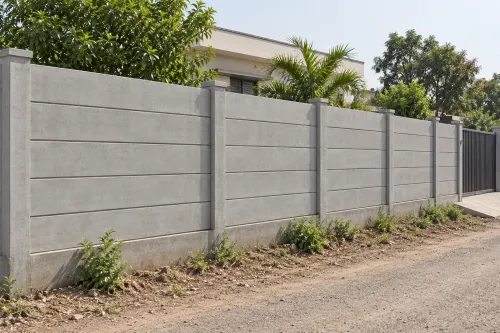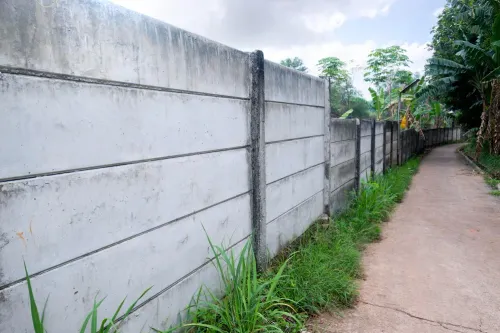


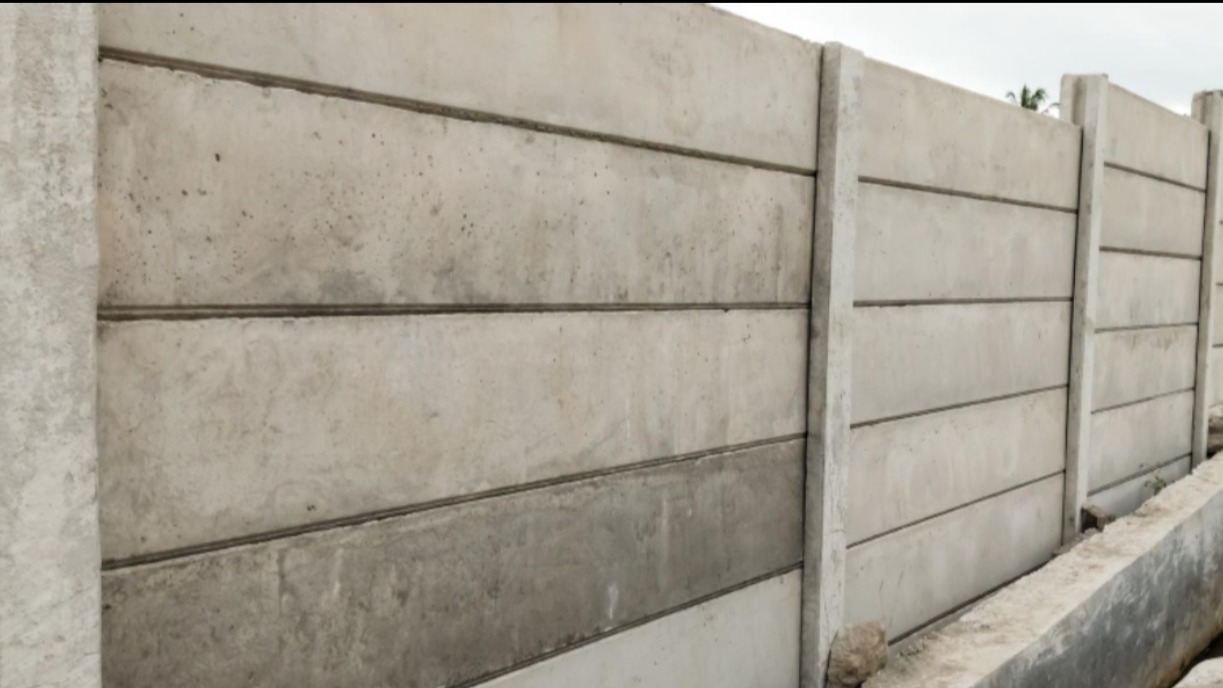
A permanent masonry boundary may not always suit land that will be redeveloped, subdivided or used in phases. In such situations, a reusable precast compound wall can offer a more adaptable way to secure and define the property without tying the entire boundary to one fixed layout.
The system uses precast concrete posts and panels manufactured under controlled conditions and assembled at the site. When the wall is specifically planned for reuse, its components may be dismantled and installed at another suitable location, subject to their condition and the requirements of the new site.
What Makes a Precast Wall Reusable?
A reusable wall is not defined merely by the fact that it uses concrete panels. Its design, installation method and handling process must collectively support future dismantling.
Several elements influence reusability:
- Modular components: Standardised posts and panels are easier to identify, handle and reinstall.
- Appropriate fixing method: Connections should provide stability during use while allowing systematic removal when necessary.
- Careful installation: Components damaged during the first installation may not remain suitable for reuse.
- Safe dismantling: Mechanical lifting and trained handling help reduce cracks, broken edges and reinforcement exposure.
- Proper storage: Panels should be supported correctly if they will not be reinstalled immediately.
Before reuse, every component must be inspected. A panel that appears usable externally may still require evaluation for structural damage.
Suitable Applications in Nashik
Nashik has a diverse mix of industrial estates, logistics facilities, agricultural land, institutional properties and expanding residential developments. Many such sites are developed in phases or undergo layout changes as operational needs evolve.
A reusable precast wall may be considered for:
- Construction project enclosures
- Industrial premises undergoing expansion
- Leased storage yards
- Temporary land divisions
- Infrastructure work zones
- Agricultural property partitions
- Warehousing and logistics sites
- Event or equipment storage areas
The wall can be particularly useful when a project owner knows that the existing boundary position is likely to change after a defined period.
Environmental and Operational Benefits
Reusing serviceable components reduces the need to manufacture and transport a completely new set of wall panels for each layout. It can also limit demolition debris compared with breaking down a conventional brick or block wall.
From an operational perspective, precast installation involves less wet work at the property. This can help shorten the period during which boundary construction interferes with vehicle movement, material handling or other site activities.
Silicon Precast produces precast compound wall components for commercial, industrial and private land applications. For customers in Nashik and nearby areas of Maharashtra, wall selection should be based on both immediate security needs and the property’s future development plan.
Factors That Determine Whether Reuse Is Practical
Not every dismantled wall can be installed on every new plot. The second location may have different soil conditions, ground levels, wind exposure or height requirements. Posts and foundations that were suitable for the original site may need to be redesigned.
Transport distance is another consideration. Concrete components require careful loading and unloading, and the cost of moving them should be compared with the value of reuse. The number of undamaged panels available after dismantling will also affect the feasibility of the new layout.
Accurate records can simplify the process. Keeping details of panel sizes, reinforcement specifications, original installation conditions and maintenance history makes future evaluation more reliable.
A reusable precast compound wall works best when reuse is an intentional part of the original plan. Appropriate engineering, disciplined handling and periodic inspection can help the components deliver value across changing site layouts while maintaining the safety and functionality expected from a boundary wall.