Industrial boundary walls fail through more than cracked panels: rotating posts, eroded footings, vehicle impacts, poor drainage and wind loads can make an intact-looking run unsafe. You will be able to trace each defect to its likely cause, inspect the wall with recorded evidence, and decide whether to monitor, repair, replace or isolate it.
Key takeaways
- Trace cracks, movement, and settlement through panels, posts, bearings, and footings.
- Use photos, measurements, batch records, and delivery notes to distinguish defects from site damage.
- Inspect Nashik soil, drainage, vehicle impact, excavation, and wind exposure before repairing.
- Replace or reinforce the failed component instead of automatically replacing every panel.
Map the failure before blaming the panel
An industrial precast wall can fail by cracking, displacement, rotation, settlement, impact, corrosion or wind movement; the panel is only one part of the system. Many rcc boundary wall problems originate in the posts, sockets, footings or panel bearings.
A panel can look intact while a rotated post or undermined footing makes the entire run unsafe.
| Failure form | What it points to | Stability control |
|---|---|---|
| Panel cracking or an opened joint | Handling damage, forced fit, thermal movement or settlement | Panel end bearing and joint clearance |
| Post cracking, rust staining or spalling | Poor cover, corrosion, impact or overstress | Post reinforcement and concrete durability |
| Post rotation, leaning or settlement | Eroded soil, weak fill, shallow footing or vehicle impact | Footing size, embedment and ground support |
| Panel displacement or loss of bearing | Incorrect spacing, socket depth or post movement | Post line, plumb and panel seating |
| Efflorescence or water ingress | Moisture movement; not automatically structural failure | Drainage and sealed sockets |
| Wind-related movement | Flexible connections, inadequate embedment or exposed site loading | Post stiffness, footing resistance and bracing |
Map these controls before blaming the panel:
- Establish a benchmark, then measure post spacing and plumb before grouting.
- Check socket depth, panel bearing on both ends, footing condition and drainage paths.
- Record wall height, reinforcement drawings, soil condition, nearby excavation and vehicle-impact history.
- Reject forced-fit panels; mortar hiding a mismatch transfers stress into the panel and post.
Separate manufacturing defects from site damage
Factory defects usually repeat across several panels or posts, while site damage follows a location, event or load path. Compare the affected piece with an unused unit from the same batch, then check its dimensions, thickness, reinforcement cover, lifting points and product drawings.
A compressive-strength cube result cannot confirm these details, socket fit, grout quality or the post–foundation connection.
Use the damage pattern to narrow the cause:
- Factory defect: honeycombing, inadequate cover, embedded cracks, wrong dimensions or reinforcement-related cracking repeated on multiple units before installation.
- Transport or lifting: fresh chips at corners, diagonal cracks from lifting points, or damage concentrated on the loading and unloading faces.
- Installation error: panels forced into place, one-corner bearing, uneven socket depth, out-of-plumb posts, open joints or mortar hiding a dimensional mismatch.
- Settlement or erosion: a progressive crack, displaced post, changing joint width, panel loss of bearing or a leaning run beside soft, filled or washed-out ground.
- Impact: crushed concrete, fresh abrasion or a local break at vehicle height, gate approaches or forklift routes.
- Weather or exposure: rust staining, longitudinal cracking, delamination, spalling, efflorescence or water marks near poorly sealed sockets and drainage paths.
Record wall height, panel and post dimensions, crack width and length, post plumb, foundation depth, soil, drainage, excavation and impact history. Date-stamped photographs need a scale and wider location view; a crack photograph alone cannot reliably classify precast concrete boundary wall damage.
Increasing cracks, exposed steel, loss of bearing or a displaced post require structural inspection before patching.
Inspect the wall and set action thresholds
A reliable inspection record ties each defect to a fixed location, not just a general note such as “wall damaged.” For industrial boundary wall problems in Nashik, record:
- Wall height, panel length and thickness, post dimensions, socket depth, foundation depth, reinforcement or product drawing reference, and installation date.
- Post spacing and plumb, panel bearing at each end, joint openings, wall alignment, and any forced-fit or mortared connection.
- Crack location, direction, length and measured width; note rust staining, exposed steel, delamination, spalling, efflorescence and water marks.
- Soil condition, standing water, drainage paths, erosion, nearby excavation, filled ground, level changes and construction activity.
- Gate locations, vehicle-impact history, flooding, lifting damage and signs of settlement.
Photograph the full wall run, each defect with a scale and date, both sides of the panel, post bases, joints, drainage route and any impact mark. A crack photograph alone cannot identify its cause.
| Action | Threshold |
|---|---|
| Monitor | Stable cosmetic crazing, efflorescence or isolated hairline cracking with sound concrete, full panel bearing and no movement. Recheck after monsoon or at a defined interval. |
| Replace or obtain structural assessment | Crack width or length increases, reinforcement is exposed or rusting, concrete delaminates, bearing is lost, or a post has measurable rotation or settlement. |
| Isolate immediately | A leaning or displaced run, cracked or rotated post, open foundation void, panel likely to fall, or impact damage beside a gate or traffic route. |
Barricade the danger zone and keep vehicles away until a competent engineer confirms stability.
Check Nashik ground, drainage, traffic and wind loads
Soil movement, runoff, vehicle activity and wind loading can turn a sound panel wall into a footing failure. A precast concrete boundary wall for problems in nashik must account for monsoon water, black-cotton soil and filled industrial plots, not just panel strength.
Water can erode soil beside a post, soften compacted fill and leave one footing less supported than the next.
Check these site causes before assigning blame to the concrete:
- Trace every runoff path. Ponding, blocked drains and discharge from roofs can wash out soil, expose footing edges and open panel joints.
- Record nearby excavation, embankment changes and heavy stockpiles. New loads or cut slopes can move soil and rotate posts.
- Check vehicle routes, reversing areas, gates and loading bays for impact marks, bent posts and repeated vibration. A forklift or truck strike can damage a post without leaving major panel cracks.
- Assess wind using IS 875 Part 3. Check post bending, footing overturning, sliding, soil bearing and panel-connection forces; a large uninterrupted wall can fail even when its panels pass a compression check.
For industrial boundary wall problems in nashik, measure post plumb, footing exposure, drainage levels and crack widths after rain and during dry conditions. Also inspect rust staining, spalling and damp sockets: porous concrete, inadequate cover and chemically aggressive water accelerate reinforcement corrosion.
Correct drainage and ground support before replacing panels, or the same failure will return.
Choose the remedy and the wall system that fits the site
Repair cosmetic defects, replace isolated failed units, and redesign the support when the ground or load path is the problem. Efflorescence, laitance and stable shrinkage crazing do not automatically require removal. Increasing cracks, exposed or rusting reinforcement, delamination, lost bearing, a displaced post or a leaning run demand structural review before patching.
| Remedy | Choose it when | Reject it when |
|---|---|---|
| Repair | Damage is shallow, stable and away from reinforcement; joints, drainage or grout need correction | Cracks are widening, steel is corroding, or the post has moved |
| Replace panel | One panel has impact or handling damage, while posts remain plumb and adequately supported | The panel lost bearing because of settlement, poor spacing or post rotation |
| Replace post and redesign footing | A post is cracked, rotated, undermined or repeatedly settles; runoff or expansive soil affects support | The failure extends along the foundation or the ground remains unstable |
| Select another boundary system | Vehicle impact, flood flow, severe chemical exposure, security loading or large movement exceeds a modular panel system | The site can be stabilised and loads remain within the designed system |
Many rcc boundary wall problems are installation or foundation problems, not panel defects. Set a benchmark, correct line and plumb, improve drainage, and never force a panel into an unsuitable socket. Silicon Precast Wall Manufacturer can help compare panel dimensions, post spacing and foundation details before replacement.
Choose masonry, cast-in-place reinforced concrete, steel fencing or a crash-rated barrier when the site’s impact, security or ground demands exceed precast limits.
Related products
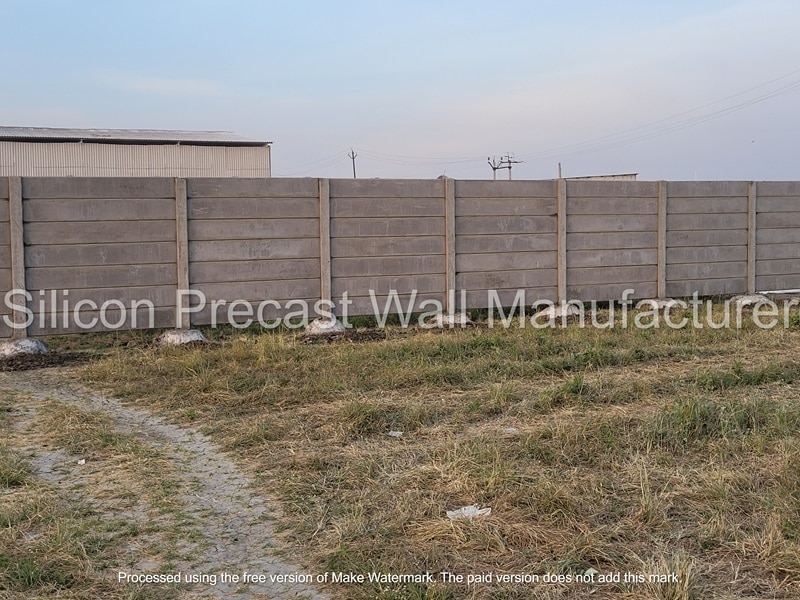 | Precast Silicon Cement Wall 50mm Precast Silicon Cement Wall Material Concrete Thickness 50 mm Usage/Application Industrial Color Grey Material Grade M-25 Built Type Panel Build Wall Type Prefabs Features:... |
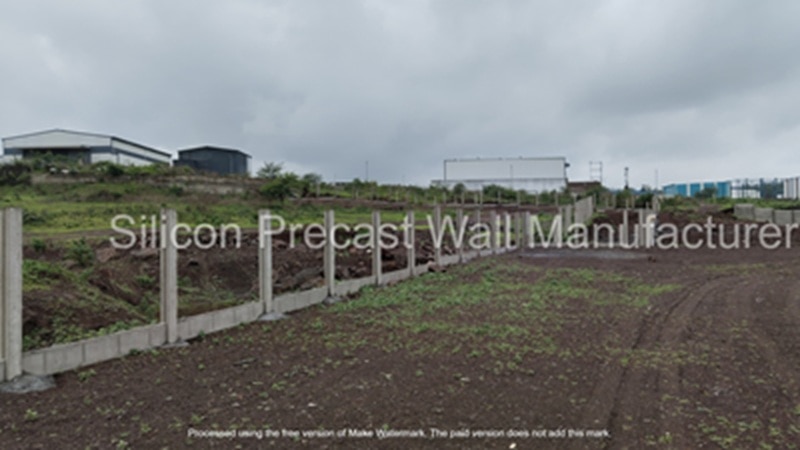 | Prestressed Compound Wall 6ft Prestressed Compound Wall Wall Height 6 ft Panel Thickness 60 mm Built Type Modular Usage/Application Industrial Application Residential Color Grey Brand Silicon Precast... |
Frequently asked questions
Where do industrial precast concrete boundary wall problems usually start?
Inspect the full system: panels, posts, sockets, footings, panel bearings, and surrounding ground. Cracking or movement in a panel can result from support failure, settlement, impact, or rotation.
How can you distinguish a manufacturing defect from precast concrete boundary wall damage?
Compare the damage with manufacturing and delivery records, inspect crack location and pattern, and check for impact marks, chipped edges, bearing gaps, displaced posts, and footing movement. Site damage usually leaves evidence beyond the panel surface.
What should you inspect before repairing an industrial boundary wall in Nashik?
Check soil and settlement, stormwater paths, blocked drains, nearby excavation, vehicle routes, heavy-vehicle impact risk, and wind exposure. These conditions determine whether the wall needs drainage work, footing correction, protection, or a different system.
When should you replace a precast boundary wall panel?
Replace a panel when it has structural cracking, severe impact damage, unsafe displacement, or lost bearing that cannot be corrected safely. Repair or reset the post, socket, footing, or drainage when that component caused the failure.
Related products
 | RCC Boundary Wall 7ft RCC Boundary Wall Thickness 50 mm Built Type Panel Build Size 7 feet Usage/Application Boundary Material RCC Brand Silicon Precast Color White Features: Constructed... |
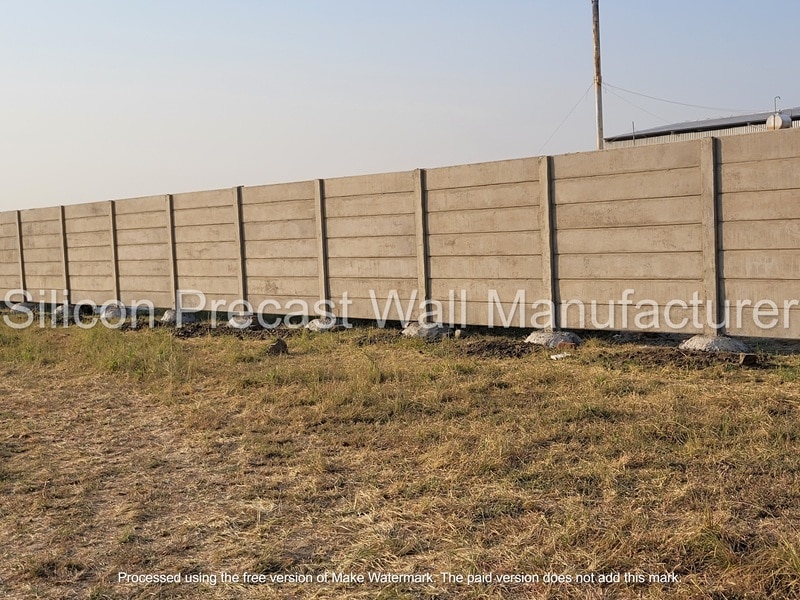 | Compound Wall Construction Services Boundary Walls Construction Services Features: Professional design and construction of boundary walls for residential, commercial, and industrial properties Use of high-quality materials... |
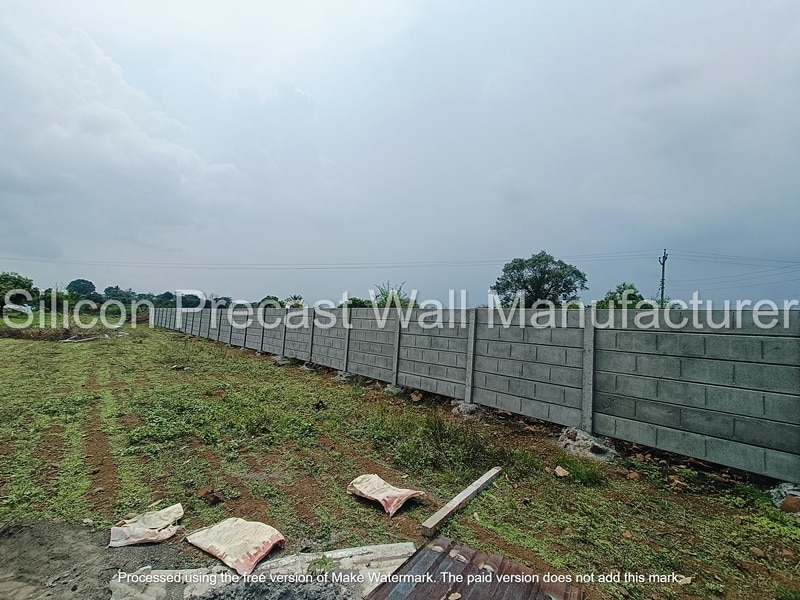 | RCC Precast Compound Wall 9ft RCC Precast Compound Wall Wall Height 9 ft Panel Thickness 75 mm Material RCC Grade Standard Technical Grade Wall Type Compound Wall Built Type Prefab Usage/Application... |
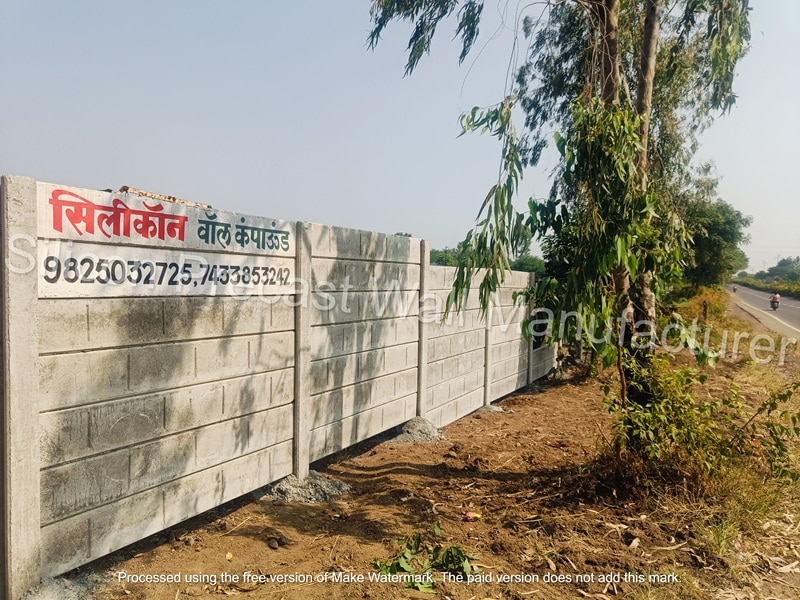 | RCC Precast Compound Wall 7ft RCC Precast Compound Wall Wall Height 7 ft Panel Thickness 50 mm Built Type Panel Build Usage/Application Construction Colored Grey Material RCC Wall Type Compound Wall Grade... |
Keywords