

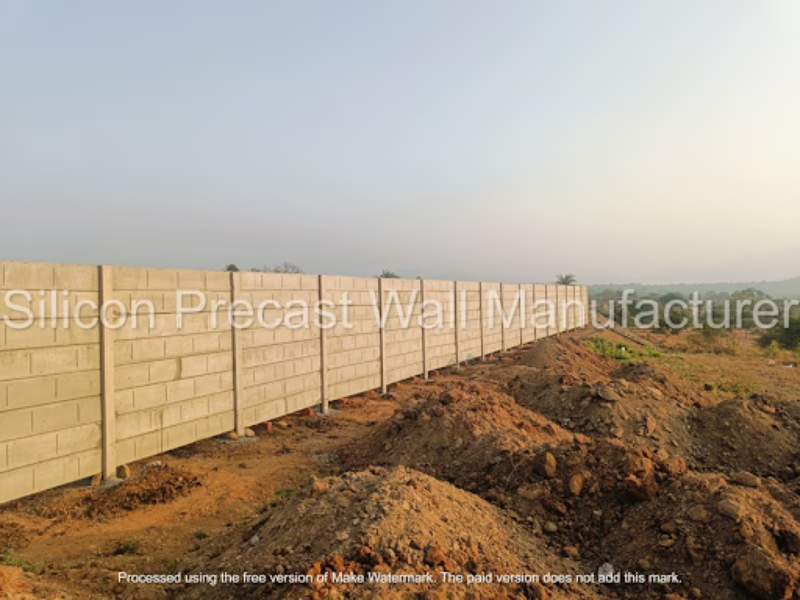
Choosing between a prefabricated compound wall and a conventional brick wall can affect construction time, site activity, maintenance and overall project planning. Both options can create a functional property boundary, but they differ considerably in how they are manufactured and installed.
For industrial plots, warehouses, agricultural properties and construction sites, the decision should be based on actual site requirements rather than familiarity alone. Silicon Precast manufactures precast boundary wall systems for customers in Nashik who need an organised alternative to traditional on-site masonry.
How the Two Boundary Systems Differ
A brick compound wall is constructed at the property using bricks or blocks, cement mortar, reinforcement and plaster. The work progresses in stages and generally involves excavation, foundation construction, masonry, curing and finishing.
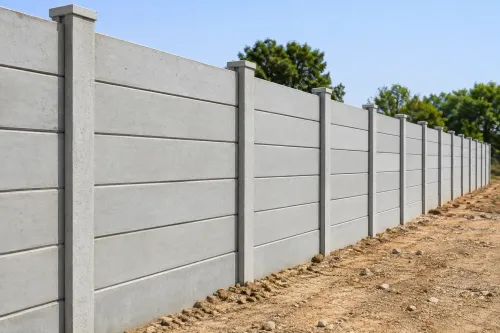
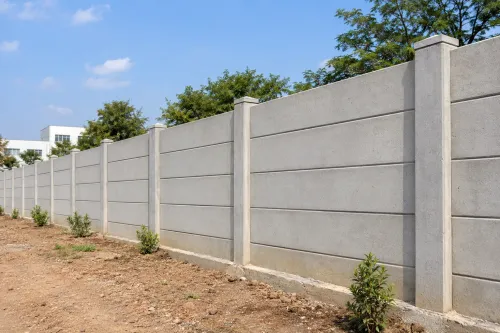
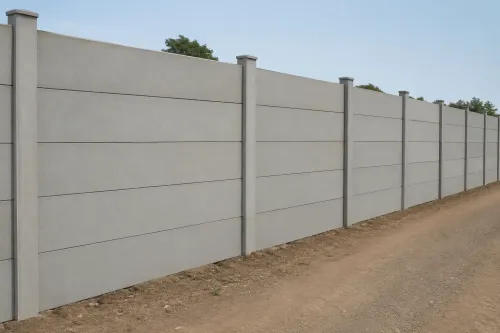
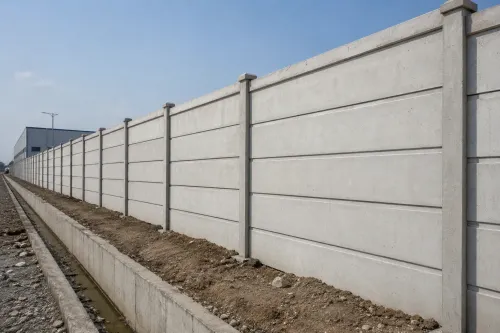
A prefabricated compound wall uses posts and concrete panels manufactured separately before installation. After the property line and post positions are marked, the supporting components are installed and the panels are assembled between them.
This difference influences several aspects of the project.
Installation Time and Site Disruption
Traditional brickwork requires multiple activities to be completed sequentially. Material storage, water availability, mixing, masonry work, curing and plastering can extend the construction period.
Prefabricated panels arrive ready for assembly after the site has been prepared. This can reduce prolonged wet construction work and help establish the boundary sooner. Quicker installation can be especially useful for active industrial or commercial premises where open boundaries may create access-control concerns.
The actual completion time still depends on wall length, ground conditions, unloading access and the number of gates or corners.
Comparing Material Consistency
Brick wall quality is influenced by the bricks, mortar proportions, workmanship and curing completed at the site. Variations in any of these areas can affect the finished structure.
Precast wall components are produced using moulds, which support consistent dimensions and a uniform appearance. Their quality depends on concrete composition, reinforcement, curing practices and manufacturing controls.
Property owners should request clear specifications for both alternatives instead of assuming that every prefabricated or brick wall offers the same performance.
Which Option Requires Less Site Work?
Prefabricated walls generally involve fewer construction materials spread across the property. They can reduce the need to store large quantities of bricks, sand and cement throughout the work period.
Brick masonry offers greater flexibility for decorative shapes and customised architectural details. However, achieving those details may require additional labour, plastering and finishing.
For a functional industrial, agricultural or commercial boundary, the cleaner and more systematic installation of precast components may offer a practical advantage.
Boundary Wall Selection for Nashik Properties
Nashik includes industrial estates, residential developments, vineyards, farms, warehouses and rapidly developing peripheral areas. The most appropriate wall varies according to the nature of the property.
A prefabricated compound wall may be preferable when:
- The boundary must be installed within a shorter schedule
- The property has a long perimeter
- On-site construction activity needs to be limited
- A uniform finish is required
- Individual panels may need future replacement
- The owner wants predictable component quantities
A brick wall may suit a property requiring extensive architectural customisation or integration with an existing masonry structure.
Look Beyond the Initial Quotation
A useful comparison should include material transport, labour, installation time, finishing, debris removal and likely maintenance. The lowest initial quotation may not represent the most economical completed boundary.
Foundation quality must not be compromised in either system. Soil type, wall height, wind exposure and surface drainage should guide the structural design.
The right choice depends on the project’s priorities. Where installation efficiency, uniformity and reduced site activity matter, a prefabricated compound wall can be a strong option. Where complex architectural detailing is the main consideration, conventional masonry may offer greater design freedom.