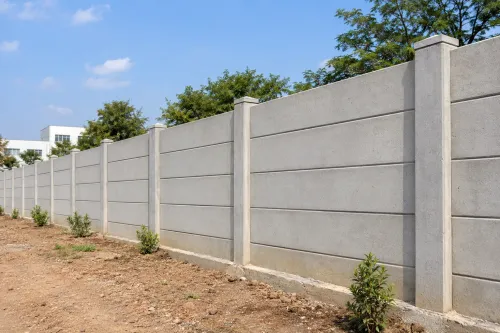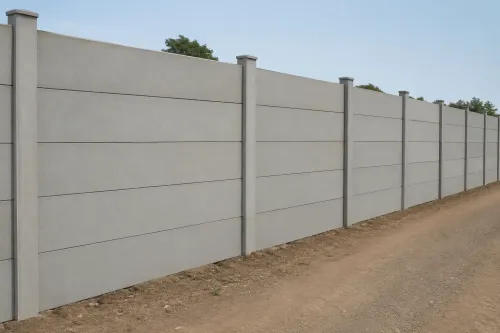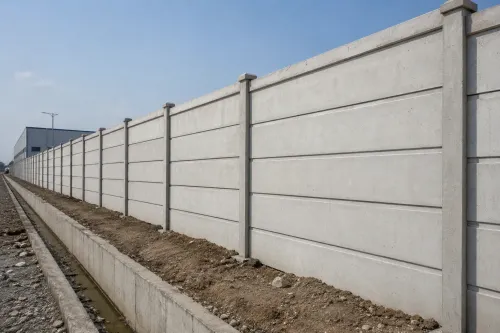


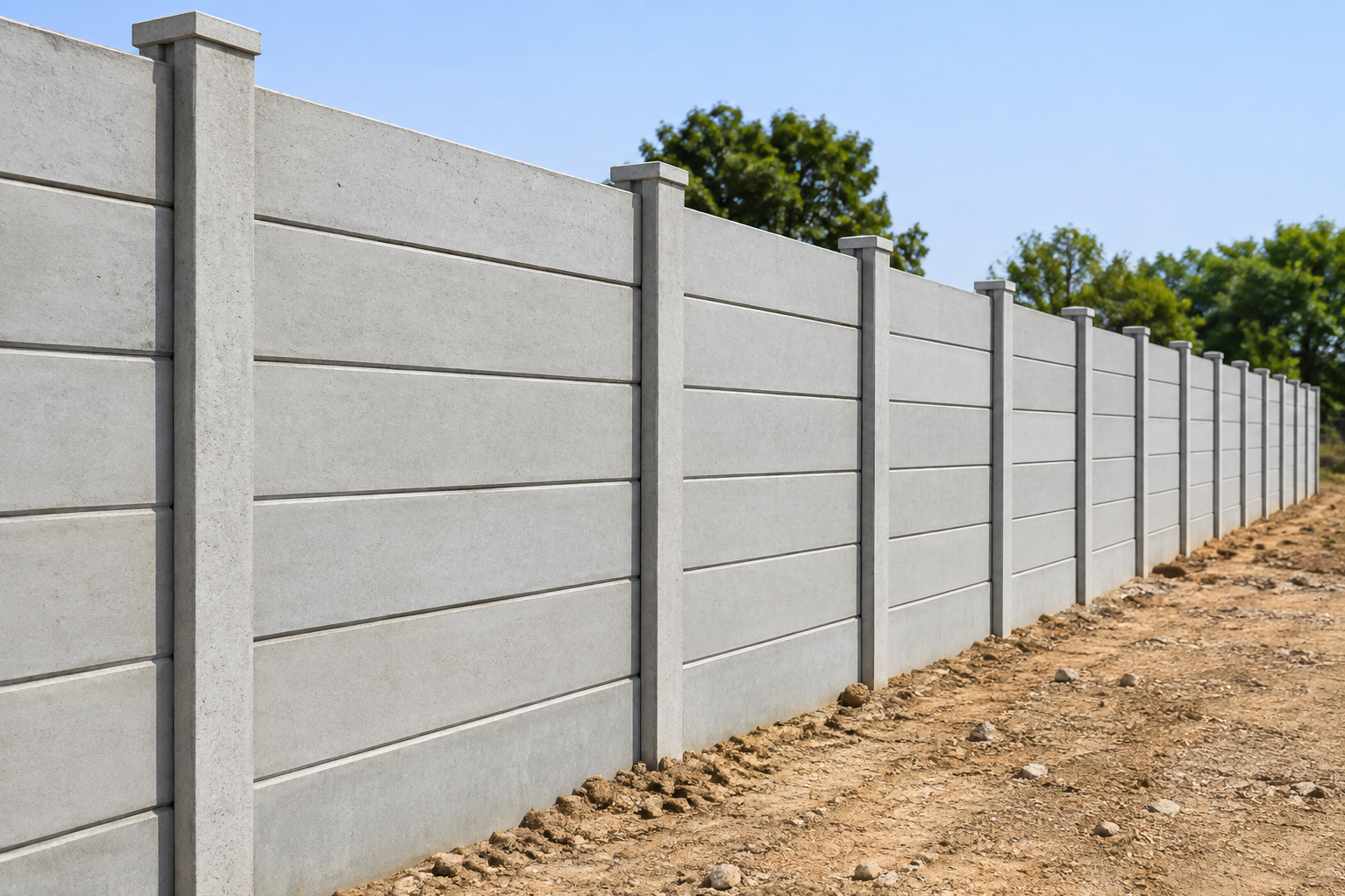
When a project needs a new perimeter, contractors often compare a Prefabricated Compound Wall with conventional brick or block masonry. Both approaches can create effective boundaries, but they differ significantly in how components are produced, how work is organised on site, and how easily construction can be coordinated with other activities.
For projects in Pune, Maharashtra, the right choice depends on site conditions, boundary length, design requirements, programme, labour availability, and long-term expectations.
Construction Method Is the Main Difference
Traditional masonry is predominantly built at the project location. Materials are delivered and the wall is progressively constructed through excavation, foundations, masonry, finishing, and related activities according to its design.
A prefabricated or precast system moves much of the component production away from the site. Prepared posts, panels, or other elements are delivered for installation.
This changes the nature of site work rather than eliminating it.
Site Time Can Be an Important Consideration
For long boundaries, conventional construction can require repeated material handling and multiple site processes.
Precast installation can reduce some of these activities because major wall elements arrive already manufactured. This may be beneficial where boundary work needs to progress without occupying large parts of an active development site for extended periods.
Actual installation time still depends on boundary length, ground preparation, access, equipment, workforce, and wall configuration.
Masonry Offers Different Design Possibilities
Traditional construction can be useful where a highly customised architectural boundary is required or where the design incorporates complex shapes, finishes, columns, lighting, or other features.
Prefabricated systems generally work most efficiently when the design takes advantage of repeatable manufactured components.
Neither method is universally superior. The correct comparison is based on project requirements.
Evaluate Labour and Site Logistics
Pune's expanding industrial and real estate areas can involve multiple contractors working simultaneously.
A boundary method requiring extensive material storage, mixing, masonry, and finishing may affect site logistics differently from one based on delivered precast components.
Before choosing, evaluate:
- Available working space
- Material storage areas
- Installation access
- Labour requirements
- Construction programme
- Equipment availability
- Boundary length
- Site level variations
Compare Costs on the Same Scope
Price comparisons can become misleading when quotations include different scopes.
One quotation may cover only components while another includes transport, installation, excavation, or other work. Procurement teams should compare equivalent specifications and clearly identify exclusions.
Maintenance and potential future modification should also be considered where relevant.
Silicon Precast Wall Manufacturer operates in the precast concrete products and infrastructure solutions segment. For contractors assessing prefabricated construction, discussions are more productive when boundary drawings, height requirements, total running length, and site access information are available.
A Prefabricated Compound Wall can offer an efficient construction approach for suitable projects, while masonry remains appropriate for others. The decision should be based on programme, site constraints, engineering, aesthetics, lifecycle requirements, and complete installed scope rather than relying on a single factor such as initial price.