

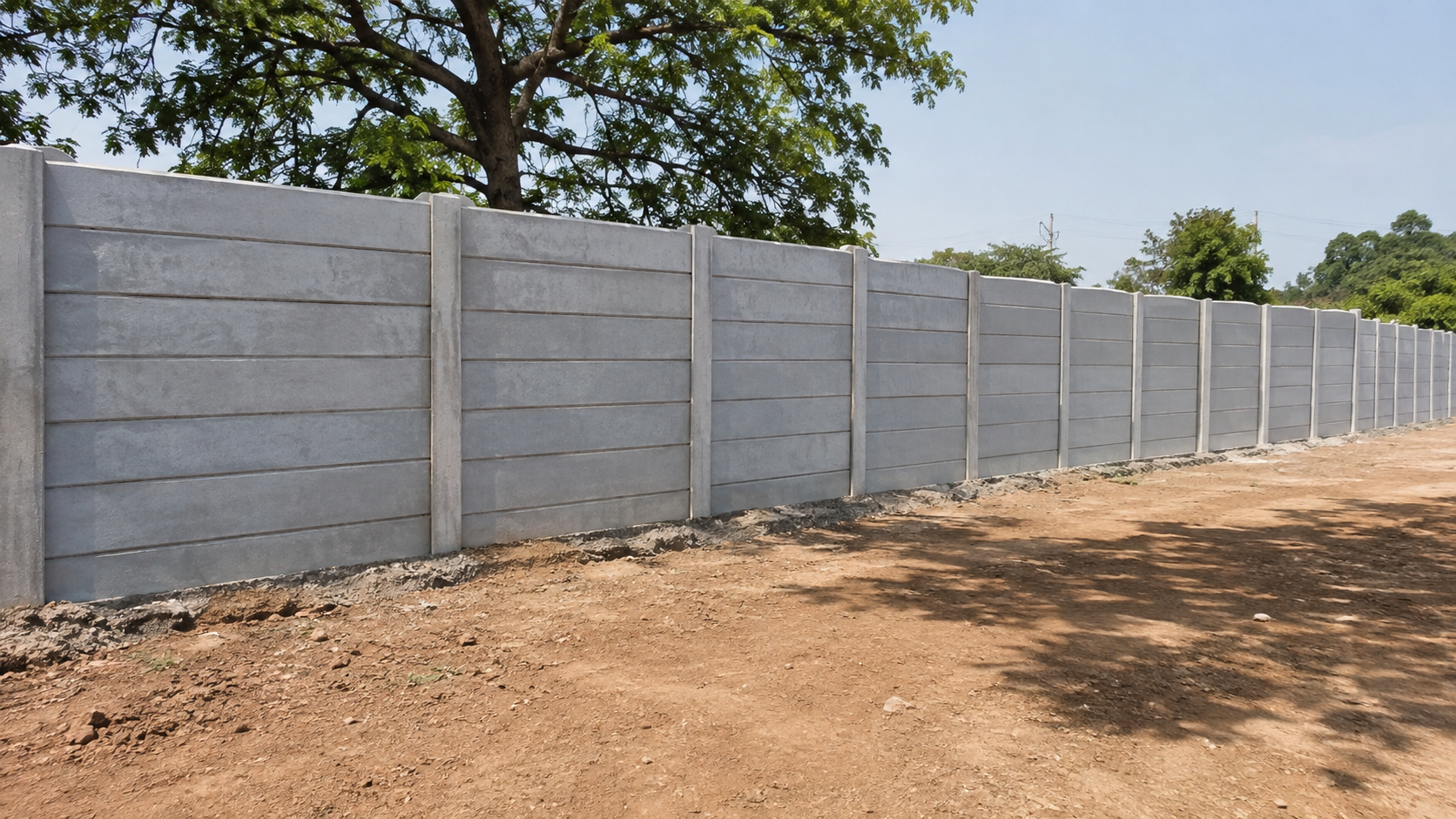
The quality of a precast concrete boundary wall depends on three closely connected factors: component manufacturing, structural planning and site installation. Even good-looking panels may perform poorly if the reinforcement is inadequate, the supporting posts are inconsistent or the foundations are unsuitable for the property.
Silicon Precast manufactures precast boundary systems for industrial plots, warehouses, institutions, agricultural properties and residential developments in Nashik. Before selecting any manufacturer, buyers should examine the complete system rather than comparing only the quoted rate per running foot.
Check Whether the Manufacturer Understands the Application
A dependable manufacturer should first ask why the wall is needed. A basic partition around agricultural land has different requirements from a high-security industrial boundary.
Be prepared to provide:
- Total boundary length
- Required wall height
- Property type
- Ground and soil conditions
- Number and size of gates
- Site access for transport vehicles
- Privacy and security expectations
- Desired finish or panel pattern
- Expected project schedule
If a quotation is offered without discussing these points, important site-related costs or design requirements may be missing.
Review the Concrete Components
Ask for clear information about the panels and supporting posts. Buyers should understand the dimensions, reinforcement arrangement, concrete specifications and intended application of each component.
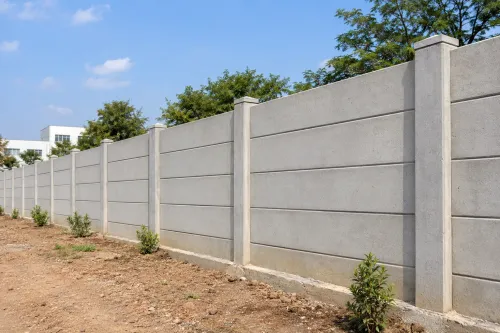
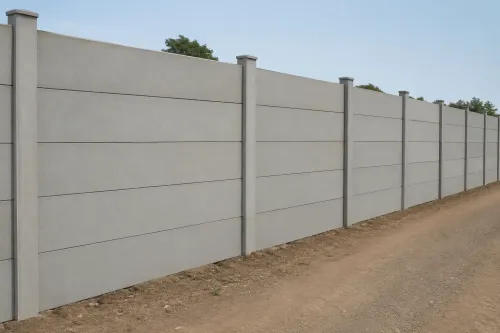
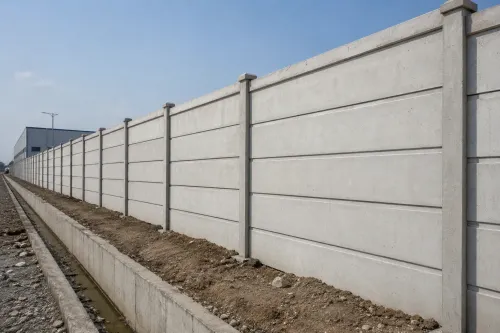
Visual consistency also matters. Panels should have reasonably uniform dimensions, properly formed edges and a finish suitable for the agreed product category. Components with severe cracks, exposed reinforcement or significant damage should not be used.
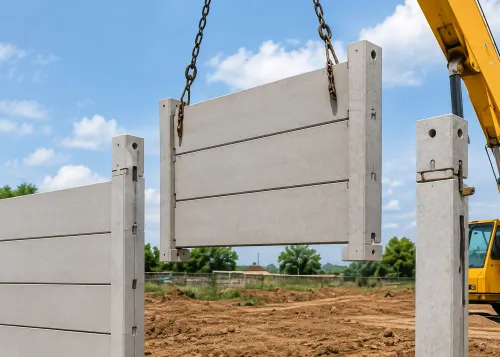
Supporting posts must be compatible with the panel system. They should have the correct grooves or connection details and be designed for the selected wall height.
Evaluate the Manufacturing Process
Controlled moulding and curing contribute to dimensional consistency and reliable product quality. During a factory or sample inspection, buyers can look for organised material handling, suitable storage and measures taken to avoid panel damage.
Useful questions include:
- How are panels reinforced?
- What curing method is used?
- How are finished components stored?
- How are panels loaded for transportation?
- What happens if a component is damaged in transit?
- Are different specifications used for different wall heights?
- Can corner and end-post requirements be accommodated?
Clear answers indicate that the provider has considered more than surface appearance.
Manufacturer Selection for Projects in Nashik
Local terrain and project conditions across Nashik can vary considerably. Industrial estates may require walls around active vehicle routes, while agricultural and peripheral plots may have sloping or uneven ground.
A capable provider should consider monsoon drainage, soil condition, road access and unloading space. Where the site contains filled soil or noticeable level differences, the installation method may require additional planning.
The manufacturer should also explain which responsibilities belong to the customer. Boundary surveys, permission requirements, removal of obstructions and access to the site should be settled before installation begins.
Compare Quotations on the Same Scope
Two quotations cannot be compared accurately if one includes installation and transportation while another covers only panels and posts.
Request an itemised proposal showing:
- Component specifications and quantities
- Wall height and total measured length
- Transportation and unloading
- Foundation and installation work
- Corner and end sections
- Gate provisions
- Treatment of uneven ground
- Applicable taxes
- Completion assumptions
- Exclusions and additional charges
The right manufacturer combines transparent specifications with realistic site planning. Before placing an order, arrange a technical discussion with Silicon Precast and provide accurate plot measurements, photographs and application details. This allows the proposed precast concrete boundary wall to be evaluated against the property’s actual requirements.