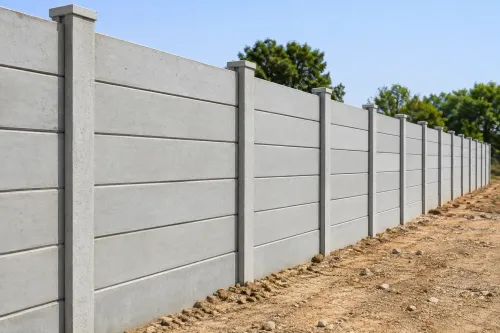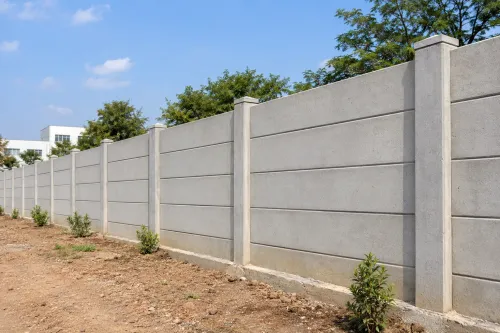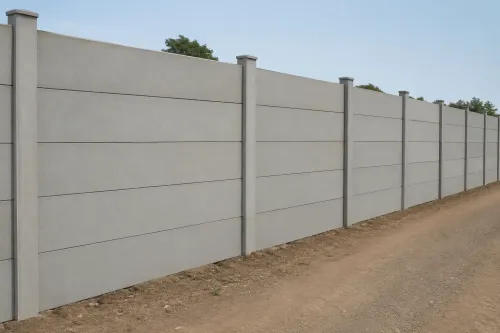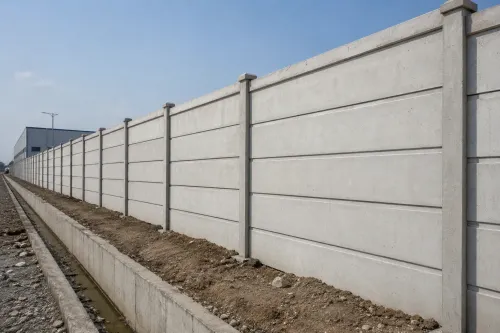


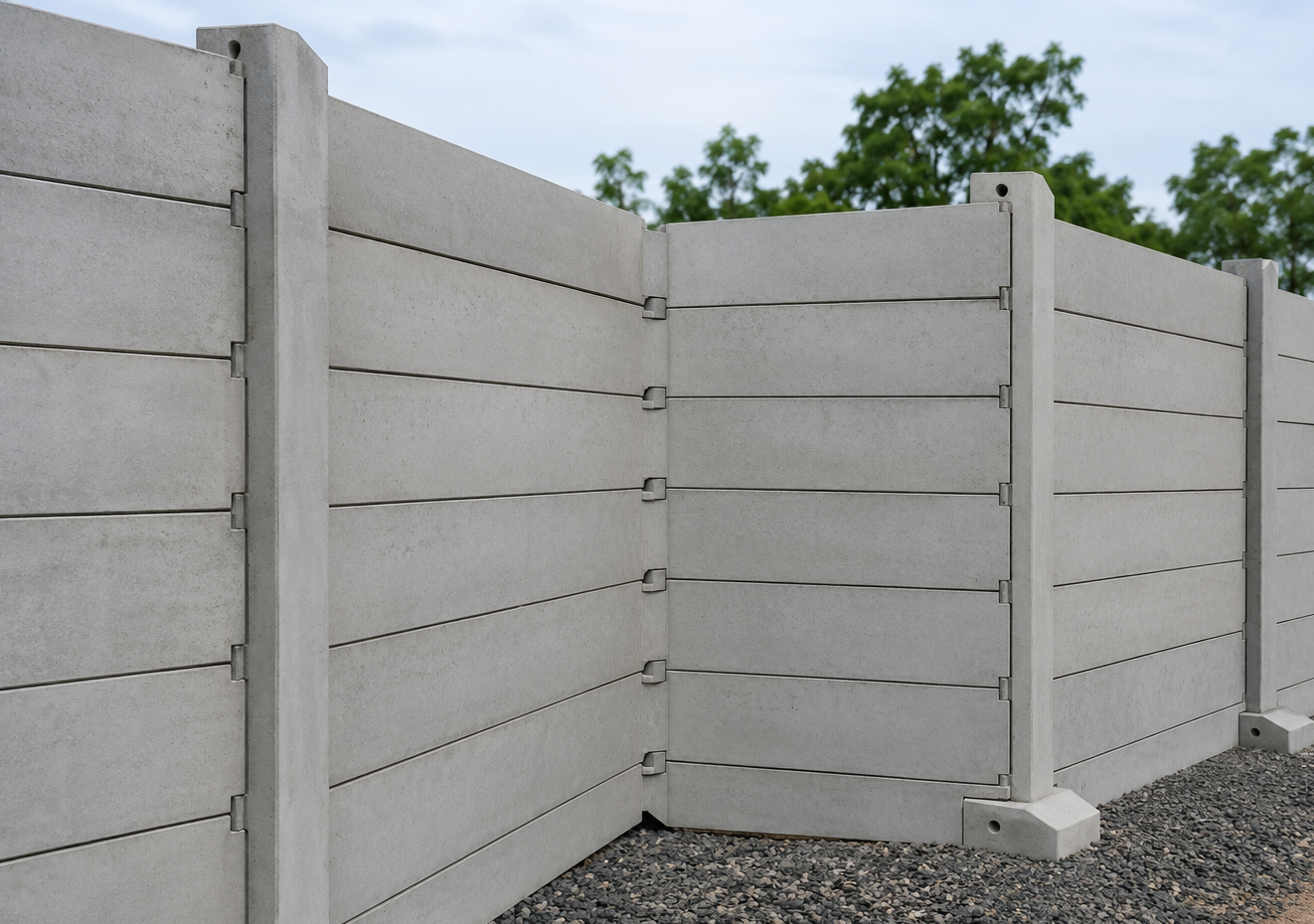
Infrastructure projects often require boundary protection before permanent buildings, roads, utilities, or industrial facilities are fully developed. In such situations, a Folding Precast Compound Wall can provide a practical approach to perimeter planning while allowing project teams to respond to changing site requirements.
For civil contractors and infrastructure developers in Nashik, Maharashtra, boundary systems need to be evaluated not only for appearance but also for installation requirements, site conditions, future access, and overall project planning. A precast approach shifts much of the component production away from the construction site, helping simplify on-site activities.
How a Folding Precast Compound Wall Works
A folding or relocatable precast wall system is generally made from factory-produced concrete components that are transported to the project location and assembled according to the required boundary layout.
Depending on the system design, individual components may include precast posts, concrete panels, supporting elements, and connections. Because the wall is assembled from manufactured components, it can offer greater planning flexibility than a completely cast-in-place boundary.
This can be useful for:
- Industrial development sites
- Construction yards
- Warehousing projects
- Infrastructure facilities
- Large land parcels
- Temporary project boundaries
- Phased real estate developments
The suitability of a particular system should always be checked against site conditions and engineering requirements.
Why Flexibility Matters on Developing Sites
Construction sites rarely remain unchanged throughout a project. Vehicle access may shift, storage areas may be relocated, internal roads may be developed, and additional land may be brought into use.
A boundary solution that supports planned modification can therefore be valuable where the project layout is expected to evolve.
For example, an industrial developer may initially secure one portion of a property and later extend the enclosed area as construction progresses. A component-based wall system can make such planning easier than a boundary constructed entirely through conventional masonry.
Site Conditions Still Need Proper Assessment
Precast does not eliminate the need for engineering and site preparation. Before installation, contractors should review factors such as:
- Ground level and soil condition
- Required wall height
- Boundary alignment
- Wind exposure
- Drainage around the wall
- Vehicle and gate locations
- Nearby excavation or utility work
- Expected permanence of the boundary
Uneven terrain may require additional preparation. Similarly, a wall located beside heavy traffic or industrial activity may have different design requirements from one surrounding an undeveloped plot.
Installation Planning Can Reduce Site Disruption
One advantage of precast boundary construction is that components arrive at the site in a largely prepared form. This can reduce extensive shuttering, casting, curing, and masonry work along the complete boundary line.
However, efficient installation depends on accurate measurements and logistics. Contractors should ensure that unloading access, equipment movement, component storage, and installation sequencing are planned before delivery.
In active construction areas around Nashik, where several civil activities may happen simultaneously, coordination can help prevent boundary work from interfering with earthwork, drainage, road construction, or structural activities.
Choosing the System According to Project Needs
A Folding Precast Compound Wall should be selected according to functional requirements rather than simply choosing a standard configuration.
Project teams should establish the required height, expected service period, site exposure, panel dimensions, structural requirements, and possibility of future relocation or modification.
Silicon Precast Wall Manufacturer works in the precast concrete and infrastructure solutions segment, where boundary systems can be planned around different project applications. For developers and contractors, providing accurate site dimensions and intended use makes technical discussions more productive.
A well-planned precast boundary ultimately begins with understanding how the site will operate today and how it may change during later development stages.