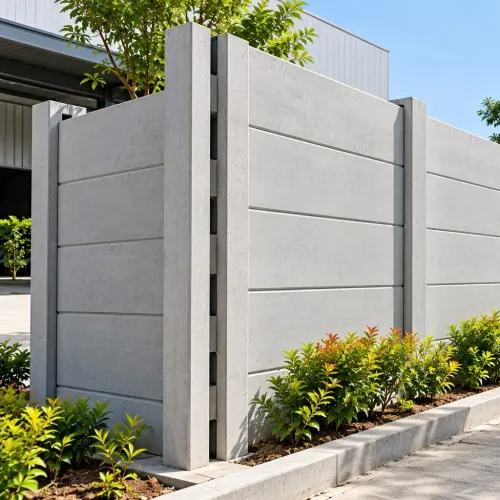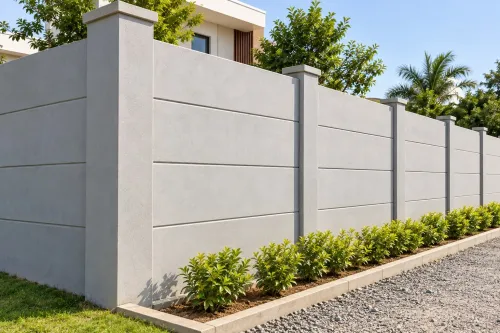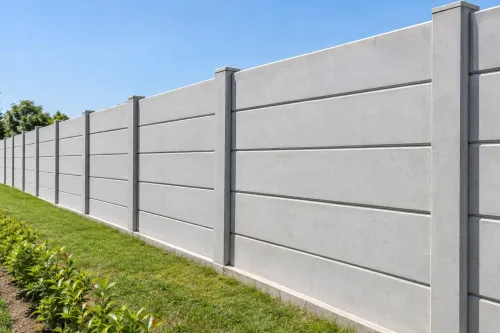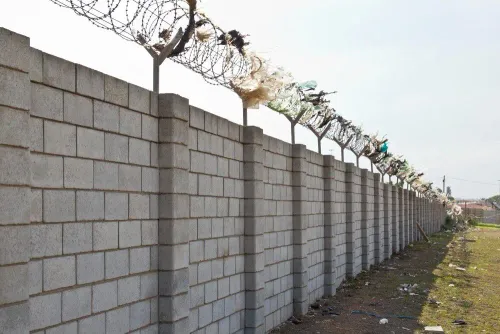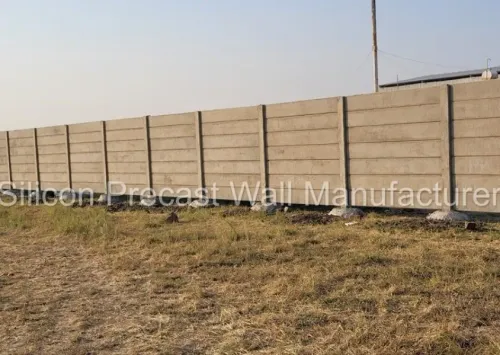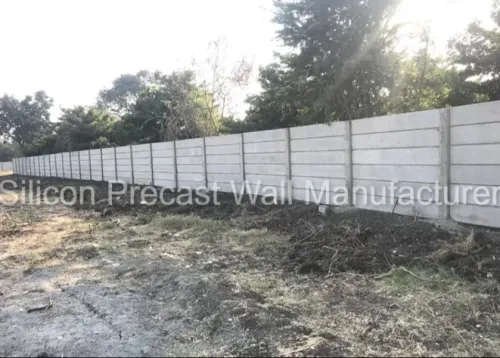
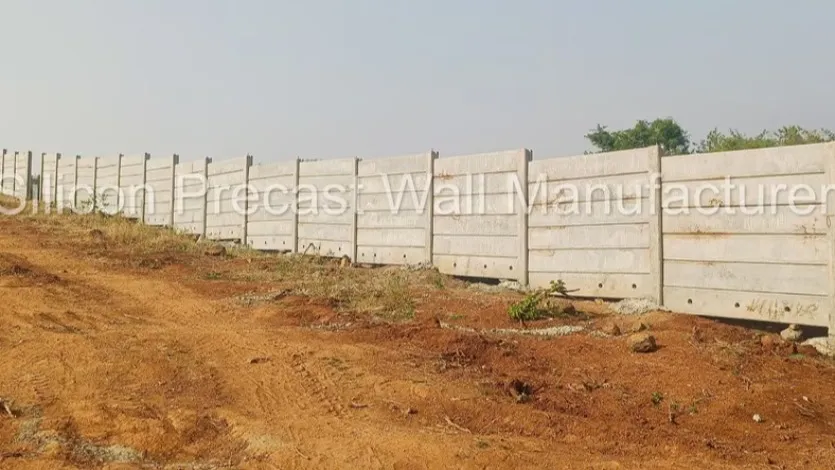
Industrial and infrastructure properties often need boundary systems that clearly define restricted areas and support broader site-security planning. A Hi-Tension Compound Wall may be considered for applications where perimeter control is an important project requirement, but the final configuration should be selected according to engineering, operational, and site-specific considerations.
For industrial developers and civil contractors in Ahilyanagar, Maharashtra, the selection process should begin with a risk and site assessment rather than choosing a wall purely from a standard product description.
Identify the Security Requirement
Not every property needs the same boundary arrangement.
A manufacturing plant, logistics yard, utility facility, infrastructure site, and real estate development can have very different levels of access control.
Project teams should determine whether the wall primarily needs to provide property definition, visual screening, controlled access, enhanced perimeter separation, or a combination of these functions.
Coordinate the Wall With the Security Plan
A boundary is only one element of site security.
Gate controls, lighting, surveillance, guard locations, vehicle access, pedestrian movement, and internal security procedures may all form part of the wider strategy.
The compound wall should therefore be planned with these systems rather than treated as an isolated civil structure.
Review Height and Structural Requirements
Where increased boundary height or additional perimeter features are proposed, appropriate engineering becomes important.
Site exposure, wind conditions, foundation requirements, post configuration, ground characteristics, and applicable project standards should be reviewed by qualified professionals.
Contractors should avoid assuming that a configuration used successfully at another property can automatically be reproduced without assessing the new site.
Examine the Boundary Route
Before procurement, inspect the entire alignment.
Pay particular attention to:
- Changes in ground level
- Road crossings
- Drainage channels
- Underground utilities
- Gate locations
- Corners
- Existing structures
- Areas with restricted installation access
Early identification of these conditions can reduce changes during execution.
Evaluate the Manufacturer's Project Readiness
For large industrial projects, supplier capability should extend beyond producing a sample component.
Procurement teams should discuss manufacturing capacity, quality controls, expected delivery schedule, transport arrangements, installation methodology, and the ability to coordinate phased supply.
Technical documentation should also be sufficiently clear for the project's engineering team to review.
Define the Commercial Scope Clearly
Before placing an order, establish what is included in the quotation.
Transportation, unloading, installation equipment, civil preparation, foundations, gates, and other site activities may be priced separately depending on the project.
Silicon Precast Wall Manufacturer supplies precast concrete and infrastructure-oriented solutions and can assess boundary requirements using project dimensions and application information. For industrial enquiries, sharing site drawings, required height, total length, access details, and construction schedules helps establish a more accurate scope.
A Hi-Tension Compound Wall should form part of a coordinated perimeter strategy. For projects in Ahilyanagar and across Maharashtra, careful supplier evaluation, engineering review, site assessment, and scope definition can help ensure that the selected boundary system supports both construction requirements and the property's long-term operational needs.
Keywords