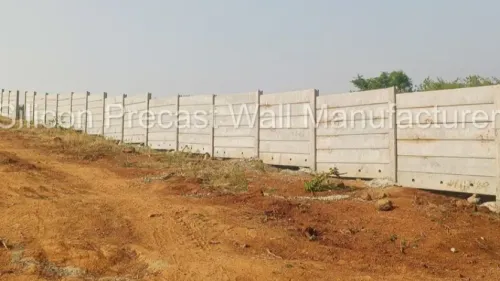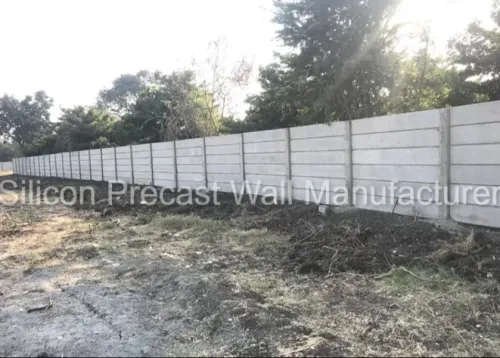
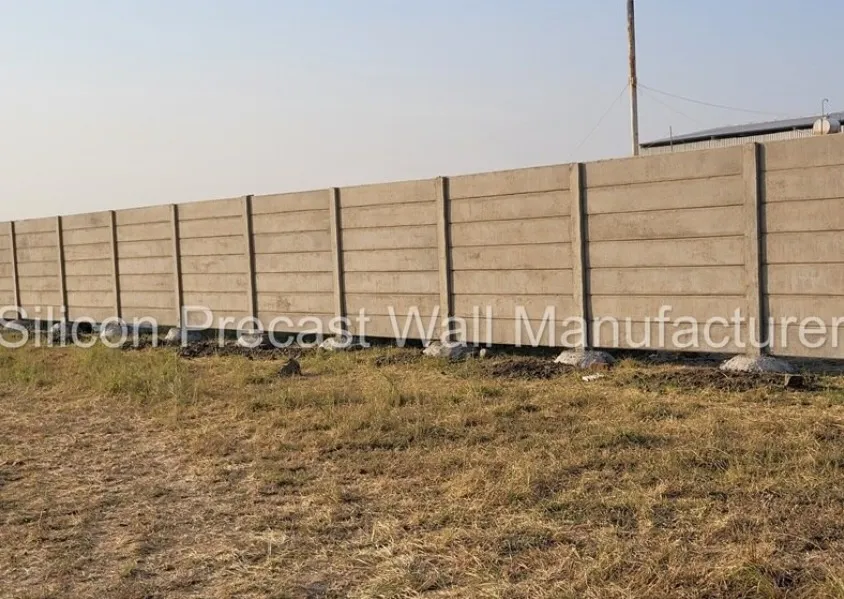
Panel thickness is one of the first specifications buyers notice when reviewing a precast wall quotation. A 50mm Precast Compound Wall may be offered for certain boundary applications, but thickness alone does not determine whether a wall system is suitable for a particular project.
For procurement teams, contractors, and consultants in Mumbai, Maharashtra, a proper evaluation should consider the complete wall assembly, manufacturing specification, structural requirements, site exposure, and intended use.
What Does the 50mm Specification Tell You?
A 50mm description generally refers to a specified panel thickness within the proposed wall system. It provides useful dimensional information, but it should not be treated as a complete measure of wall performance.
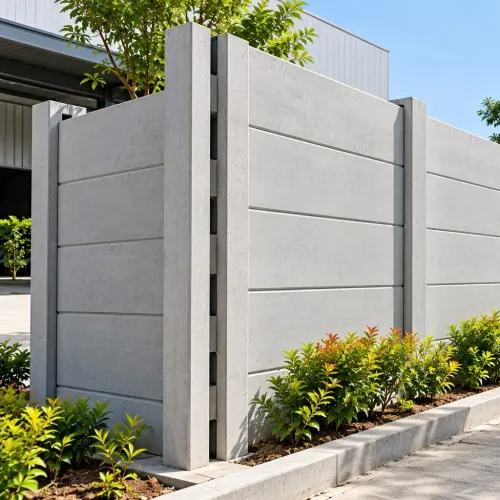
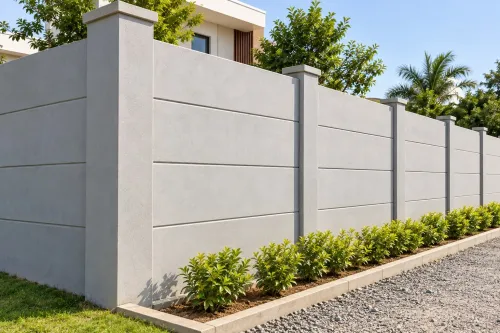
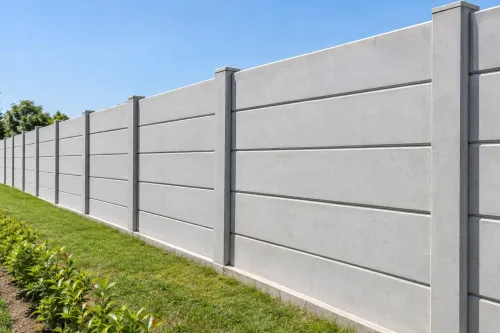
A precast boundary functions as a system. Panels interact with posts, foundations, connections, and site conditions.
Consequently, two products with the same nominal panel thickness may not necessarily have identical specifications or suitability.
Review the Concrete and Reinforcement Details
Ask the manufacturer for relevant technical specifications instead of relying only on overall dimensions.
Depending on the product and application, information may include concrete grade or specified strength, reinforcement arrangement, panel dimensions, post dimensions, and manufacturing details.
Project engineers or consultants can then determine whether the proposed system corresponds with project requirements.
Consider Wall Height
Panel thickness should be evaluated alongside total wall height.
A low boundary and a tall perimeter wall experience different conditions. As height changes, post arrangement, foundation requirements, and other structural considerations may also change.
Buyers should therefore avoid specifying a panel thickness independently from the complete required wall configuration.
Evaluate Site Exposure
Mumbai projects can range from sheltered urban plots to more exposed industrial and infrastructure locations.
Wind conditions, neighbouring structures, ground characteristics, drainage, and site activity can all influence boundary planning.
A product suitable for one environment should not automatically be assumed suitable for another without appropriate technical review.
Check Manufacturing Quality
Dimensional consistency is particularly important in prefabricated systems because components must fit together during installation.
Procurement teams should consider:
- Panel dimensional consistency
- Surface condition
- Edge quality
- Post compatibility
- Handling practices
- Storage methods
- Manufacturing controls
Where the project quantity is substantial, inspection requirements can be agreed before bulk supply.
Compare Complete Specifications
A purchasing decision based only on thickness and price can overlook important differences.
Ask competing suppliers to quote against the same wall height, length, technical requirements, transport scope, installation scope, and site conditions.
Silicon Precast Wall Manufacturer operates in the precast concrete and infrastructure solutions field and can discuss panel and wall configurations based on project requirements. For large enquiries, technical details should be reviewed before commercial terms are considered final.
A 50mm Precast Compound Wall should therefore be evaluated as an assembled boundary system rather than as a single panel measurement. Contractors who examine materials, posts, foundations, height, manufacturing consistency, logistics, and installation scope are better positioned to choose a solution appropriate for the actual site.
Keywords